Why we remove chaff
Six higher taste scores. A closer look at chaff's own aroma. Why we take the extra step with Center Cut coffee.
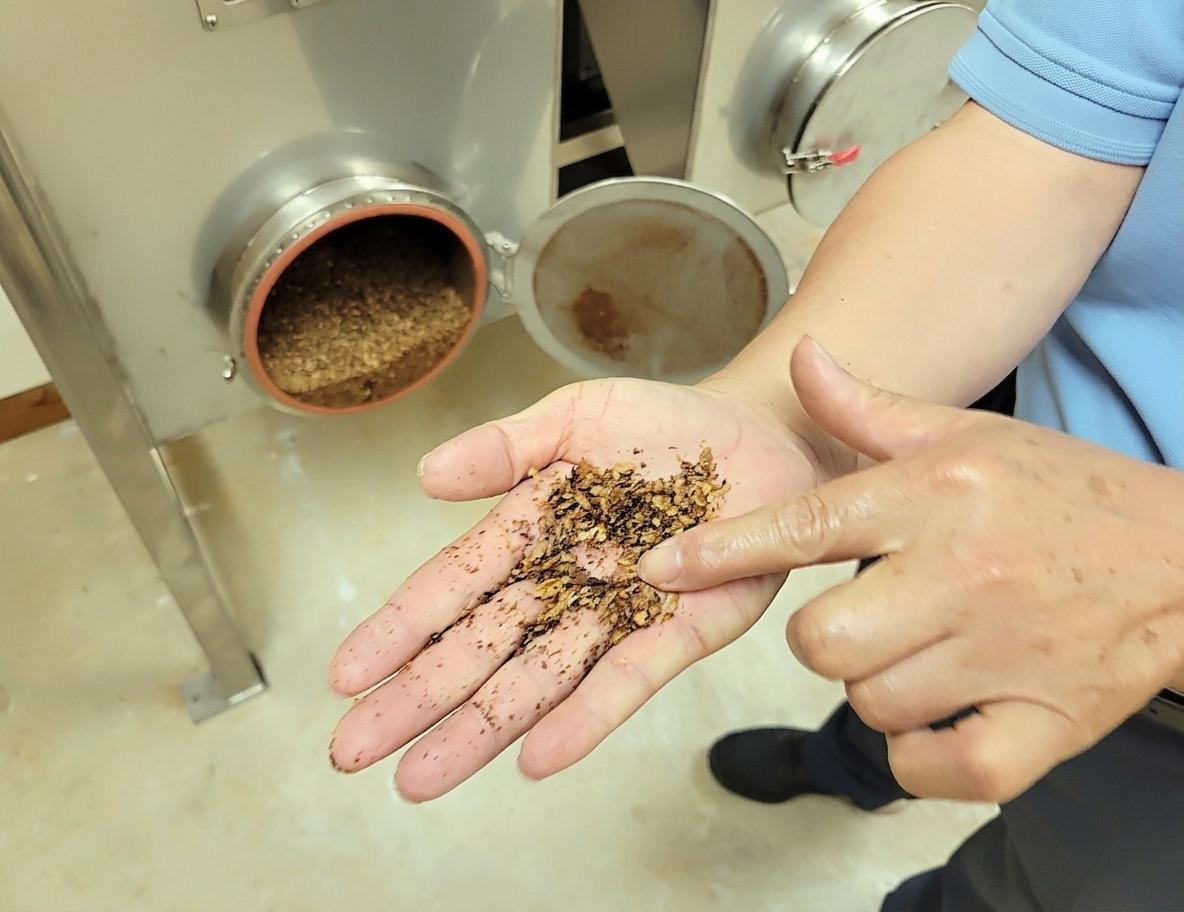
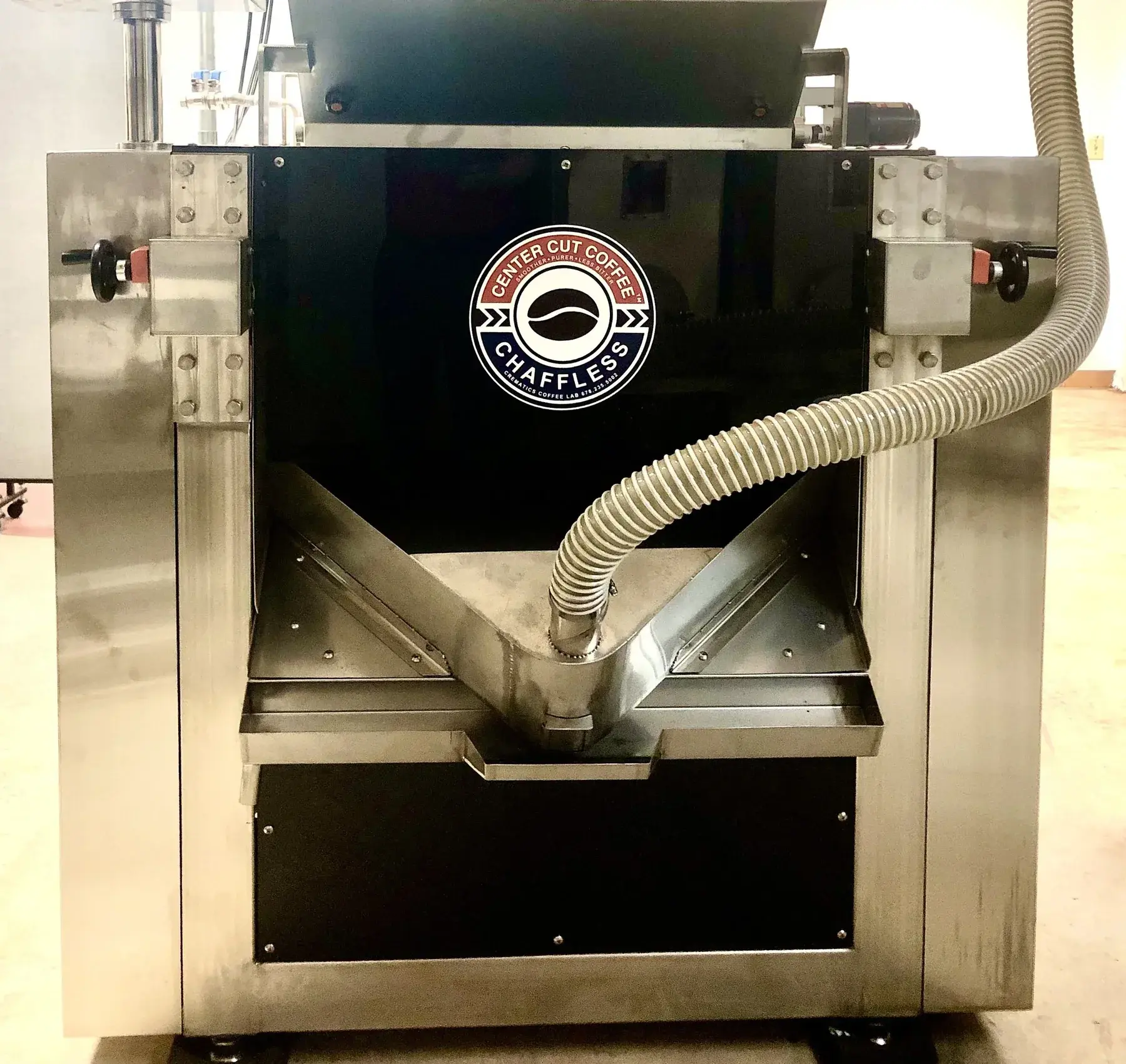
We remove chaff because the cup deserves an extra step. Our Center Cut® process cracks roasted beans and uses airflow to separate residual silverskin before packing. The goal is a cup with a clean finish and room for the coffee's own character.
The strongest published taste comparison in our research starts with a simple result: six categories, six higher mean liking scores for the silverskin-removed sample. Aftertaste and clean cup each led by 2.0 points on a 10-point scale. These are the applicant-reported results of a 100-person comparison in WO2024181850A1, Table 1.
There is also a concrete reason to look closely at what gets separated. An analysis of isolated coffee silverskin identified (Z)-2-nonenal as its leading compound by odor activity value. Its aroma associations include fatty, green, waxy and cucumber notes. That gives us a useful way to explain why a thin strip of material deserves attention.
What exactly are we removing?
Chaff begins as silverskin, the thin layer around the coffee seed. Much of it comes away during roasting. Some remains attached, including material tucked into the roasted bean's center crease.
Our process targets that residual material. Roasting develops the coffee; Center Cut adds a separation step afterward. Cracking the roasted beans produces the grounds and loosens silverskin, which we separate with airflow before packing.
That sequence is the difference you are buying. Chaffless is a deliberate preparation choice applied to coffee that still has its own origin, roast and tasting notes. You can read more about the equipment on our Center Cut process page.
Chaff has an aroma of its own
(Z)-2-nonenal ranked highest by odor activity in the isolated silverskin extract in Jeong's 2022 study of Kenya AA coffee roasted to City. The researcher used GC-MS and electronic-nose analysis to examine regular coffee, silverskin-removed coffee and the separated silverskin. Jeong, 2022, results on printed pp. 150–151
Why pay attention to that name? FooDB associates (Z)-2-nonenal with fatty, green, waxy and cucumber characteristics. Its entry helps translate the chemical name into a sensory picture. FooDB, compound FDB029683
For the broader 2-nonenal entry, The Good Scents Company also describes vegetative and melon nuances, alongside fatty, green, waxy and cucumber notes. That broader entry is distinct from the database's specific (Z)-isomer entry. The Good Scents Company, 2-nonenal
This is the material we choose to separate: residual silverskin with its own aroma profile. Our aim is to keep the focus on the coffee we selected and roasted.
Odor activity reflects a compound's concentration relative to its odor threshold. Ranking first by odor activity does not mean it is the largest component by weight. The finding concerns an isolated silverskin extract; the same study reported minor overall aroma differences between the two coffees and did not conduct a sensory panel. The taste-rating evidence comes from the separate comparison below.
Six categories. Six higher scores.
In the 2024 patent application, 100 adults aged 20–50 tasted coffee prepared with silverskin separation operating and coffee prepared with separation disabled. They received no advance information about the removal treatment, rinsed with water, and waited at least three minutes between samples. Each attribute received a liking score from 1 to 10.
The silverskin-removed sample led every category in the reported mean scores.
Scroll horizontally to compare all columns.
| Attribute | Silverskin removed | Separation disabled | Lead |
|---|---|---|---|
| Aroma | 8.9 | 7.6 | +1.3 points |
| Flavor | 8.7 | 7.8 | +0.9 points |
| Aftertaste | 8.2 | 6.2 | +2.0 points |
| Body | 8.3 | 7.4 | +0.9 points |
| Clean cup | 8.3 | 6.3 | +2.0 points |
| Sweetness | 7.9 | 6.1 | +1.8 points |
Source: WO2024181850A1, Table 1 and sensory methods. Applicant-reported mean liking ratings for the tested samples; these are research results, not measurements of Crematix retail products.
The finish earned the biggest lead
Aftertaste is what stays with you after a sip. In this comparison, aftertaste liking reached 8.2 versus 6.2. Clean-cup liking reached 8.3 versus 6.3. Each was a two-point lead on the same ten-point scale. Table 1
That is why our Chaffless story puts the finish near the front. A coffee needs to do more than smell appealing when you open the bag. We care about the experience through the sip and afterward, and these two ratings give a specific reason to take residual silverskin seriously.
Sweetness, aroma and flavor all scored higher
Sweetness liking averaged 7.9 versus 6.1, a 1.8-point lead. Aroma liking averaged 8.9 versus 7.6. Flavor liking averaged 8.7 versus 7.8. These scores describe how much participants liked each attribute; they do not measure sugar content or a percentage increase in sweetness. Table 1
The spread matters. The reported advantage covered the aroma, the flavor and the finish, giving several reasons to explore this preparation. At Crematix, we turn that interest into a practical choice: choose a coffee whose tasting notes appeal to you, then choose an available preparation for your brewer.
Body held its own, too
Body liking averaged 8.3 with silverskin removal versus 7.4 with separation disabled. The higher clean-cup score came alongside a higher body score in the same comparison. Table 1
For someone who wants a satisfying cup as well as a clean finish, that pairing is worth attention. It is one reason our case for Chaffless focuses on the whole sensory scorecard.
A higher purchase rating against three commercial coffees
The same patent application reports another evaluation in which 100 adults aged 20–50 rated a silverskin-removed sample alongside three commercial coffees identified as A, B and C.
The removed sample led all three commercial coffees in aroma, flavor, overall acceptability and purchasing-decision ratings. Its appearance rating tied Coffee A and exceeded B and C.
Scroll horizontally to compare all columns.
| Attribute | Removed sample | Coffee A | Coffee B | Coffee C |
|---|---|---|---|---|
| Appearance | 8.1 | 8.1 | 7.3 | 6.9 |
| Aroma | 8.1 | 6.9 | 6.8 | 7.3 |
| Flavor | 8.1 | 5.9 | 5.1 | 6.2 |
| Overall acceptability | 7.1 | 6.1 | 5.1 | 6.1 |
| Purchasing decision | 9.1 | 7.9 | 6.9 | 8.1 |
Source: WO2024181850A1, Table 2. Applicant-reported mean ratings on a 1–10 scale. The commercial coffees are anonymous, and this is a product comparison rather than a matched experiment isolating removal alone. The 9.1 figure is a purchasing-decision rating, not a conversion rate.
Taste matters most when it makes you want the next cup. That is the appeal of this result: the removed sample's higher sensory ratings were accompanied by the highest stated purchase rating in that comparison.
Another process, another strong sensory result
A 2026 patent application reports results from a different preparation that includes washing, brushing, steaming, drying and roasting before grinding. Its panel included members of the public and experts and used a 1–5 scale; the disclosed section does not give a panel size.
The silverskin-removed sample received an overall score of 4.80 versus 3.95 for the conventional comparator. Sweetness scored 4.50 versus 3.20, and flavor scored 4.05 versus 3.15. It also led the conventional sample and four additional comparators across all six reported sensory attributes. US20260240187A1, Table 6
These are additional applicant-reported results for that preparation, which differs from Crematix's mechanical separation after roasting. They add to the published case for examining silverskin removal while keeping each process and its results identifiable.
The powder measurements add another angle
The 2026 application also reports a 45.5% lower peroxide value in the tested silverskin-removed powder: 21.51 versus 39.48 meq/kg. Its reported acid value was 3.98 versus 4.56 mg/g, a 12.7% reduction. The application attributes these measurements to KHFF Testing & Research Institute reports. US20260240187A1, Tables 3–4
These are measurements of the tested powders. Peroxide value is an oxidation-related indicator; the figures do not establish a shelf-life extension for a bag of Crematix. Powder acid value also measures something different from the acidity of a brewed cup. Our main reason to try Chaffless remains the sensory case.
How Crematix puts the idea into your bag
Our Center Cut process makes the additional preparation concrete:
- Roast first. The coffee develops its roast profile before Center Cut begins.
- Crack the roasted beans. This produces the grounds and loosens residual material around the bean's center crease.
- Separate with airflow. The loosened chaff is separated from the heavier coffee pieces.
- Pack the ground coffee. All Crematix Chaffless products arrive ground, with the preparation selected from the options on the product page.
You get the benefit of that extra preparation without doing the separation or grinding at home. The coffee's origin and roast remain part of your choice. Use the product's tasting notes to find your starting point, and select an available preparation that fits how you make coffee.
This is why we remove chaff: we want every preparation step to serve the cup. The research gives that choice a specific taste-led case, and Center Cut makes it part of our daily process.
Try the difference in your own routine
Start with the flavors you already enjoy. Browse the Chaffless collection, compare the tasting notes, and choose your coffee and preparation. On your first brew, pay attention to the aroma, sweetness, body and especially the finish.
Keep your recipe consistent while you get to know the coffee. Use the same brewer, water and coffee-to-water ratio you normally prefer, then adjust one variable at a time. Our brew guides can help you find a starting recipe.
An extra step at our roastery. Ground coffee ready for your next brew.